About Natural Fiber Glass Yarns
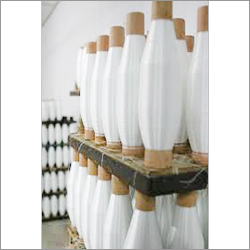
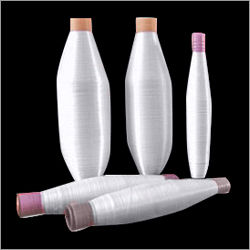
We bring forth an exclusive gamut of Natural Fiber Glass Yarn for our most valued clients in various specifications. We make our products available for our customers only after a series of quality checks. Our Fiberglass Yarn is safe and complete hazard proof. Our stock comprises C and E glass made yarns that are extensively used in areas such as electrical insulation and fire proofing applications. We import & trade in various Fibre Glass yarns of C Grades, Singles as well as twisted yarns, PTFE Coated Yarns, Texturized Yarns, Polyester Fiber Glass Yarns. - CCG Single yarns i.e. 37 1/0, 75 1/0, 150 1/0, 225 1/0,450 1/0 & 900 1/0
- Twisted yarns i.e. 37 1/2, 75 1/2, 150 1/2, 225 1/2,450 1/2 & 900 ½
Superior Material EngineeringCrafted from E-glass with a density of 2.54 g/cm and a thermal conductivity of just 0.038 W/mK, our fiber glass yarns provide optimal thermal and chemical stability. They are ideally suited for demanding industrial applications where long-lasting performance is critical.
Versatile ApplicationsFrom industrial insulation and fireproofing to composite manufacturing and electrical reinforcement, these natural fiber glass yarns adapt to a wide range of settings. Their high heat resistance and customizable coatings make them the preferred choice for challenging environments.
Customizable Formats & FinishesYarns are delivered on spools or reels and can be customized to your dimension and thickness needs (0.050.50 mm, 301000 GSM). Choose from silicon, PTFE, PU, or graphite coatingsor opt for the uncoated variantfor tailored performance in specialized applications.
FAQs of Natural Fiber Glass Yarns:
Q: How are your natural fiber glass yarns used in industrial settings?
A: These yarns are commonly utilized for thermal insulation, fireproofing, electrical reinforcement, and composite manufacturing. Their continuous filament structure and high tensile strength make them suitable for woven techniques in filtration and insulation fabrics.
Q: What benefits do the acid and alkali resistance properties offer?
A: Good resistance to acids and alkalies ensures that the yarn remains structurally sound and durable even in harsh chemical environments, extending its lifespan and reliability in industrial processes.
Q: When should a specific coating such as silicon or PTFE be chosen for the yarn?
A: The choice of coating depends on application requirements. Silicon and PTFE enhance chemical resistance and thermal insulation, while PU and graphite coatings provide added mechanical or lubricating properties. Uncoated yarns suit general applications where special surface treatments are not necessary.
Q: Where can the fiber glass yarns be applied for maximum efficiency?
A: They are most effective in environments that require robust thermal and fire resistance, such as power plants, electrical insulation panels, automotive components, and industrial filtration units.
Q: What is the manufacturing process behind these glass yarns?
A: The process involves drawing E-glass into continuous fine filaments (713 microns), bundling them as yarn, and optionally coating them with silicon, PTFE, PU, or graphite to enhance specific properties before being spooled or reeled.
Q: How does low moisture absorption (<0.1%) improve yarn performance?
A: Minimal moisture uptake prevents deterioration, swelling, or reduction in electrical insulation properties, making these yarns reliable in high-humidity or moisture-prone environments.
Q: What are the main benefits of using natural fiber glass yarns in reinforcement applications?
A: Their high tensile strength, durability, and non-combustible nature make them ideal for reinforcing industrial composites, improving mechanical stability and fire safety in finished products.




 Send Inquiry


 Send Inquiry